 Go to content


Ideas and Insights
Stockton is entering a new chapter. As part of a major town centre redevelopment, the riverside is being transformed into a vibrant green space, reconnecting the High Street with the River Tees and giving local people easier access to nature, movement and play.
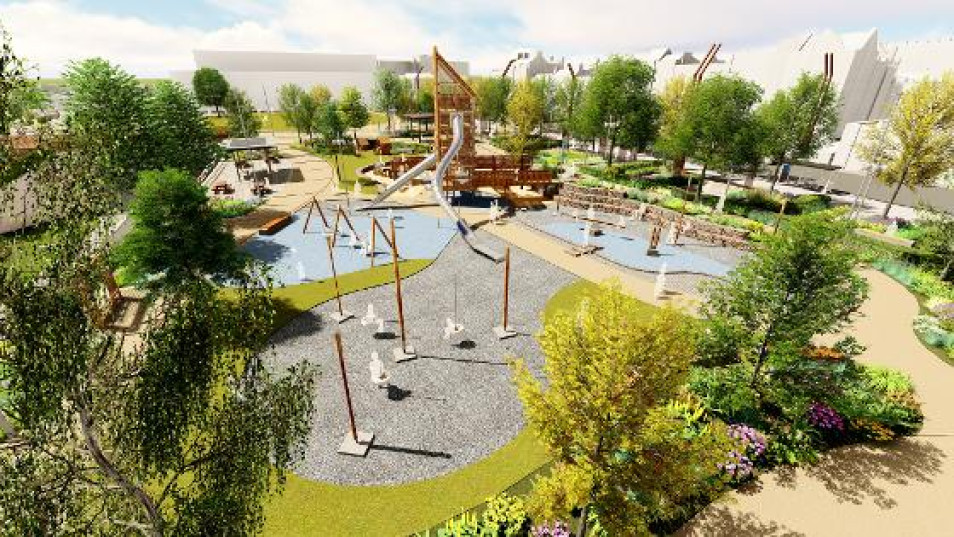
At the heart of this regeneration is a striking new land bridge – a 180-foot structure that will link the town directly to the waterfront by crossing over the previously divisive Riverside Road. For years, this road has acted as a physical barrier, cutting off residents from the open spaces just beyond. This new connection will change that, creating a clear and accessible route for walkers, families, cyclists and those using mobility aids to move freely between the town and park.
This isn’t just about infrastructure. It’s a shift in how Stockton thinks about place, people and long-term health.
Walkable towns are healthier towns
The physical environment has a huge influence on our behaviour. When towns are walkable, well-connected and easy to navigate, people move more, spend more time outside and build stronger social ties. These small changes add up. According to the Climate Reality Project, walkable cities help lower obesity rates, reduce depression and anxiety, and improve cardiovascular health across all age groups (Walkable Cities Can Benefit the Environment, the Economy, and Your Health | The Climate Reality Project).
More locally, studies show that Stockton-on-Tees faces significant health challenges. In 2022, Healthwatch Stockton reported that one in four children in their final year of primary school were classified as obese (Have your say on Stockton Borough Council healthy weight survey | Healthwatch Stocktonontees). While the causes are complex, the role of the built environment is becoming clearer. When families have easy access to green spaces and safe play areas, they’re more likely to be active together – and build lasting habits that support healthier futures.
By making walking and cycling easier, Stockton’s new land bridge and river park don’t just create a new route through the town, they offer a practical way to support public health.
The importance of play in public space
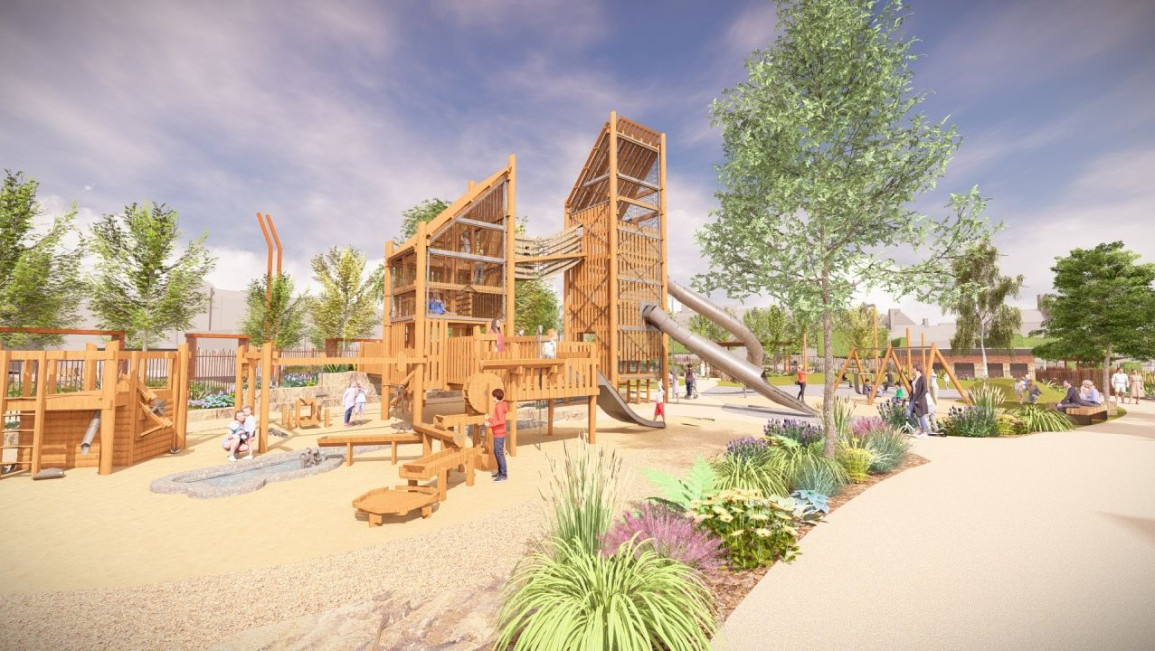
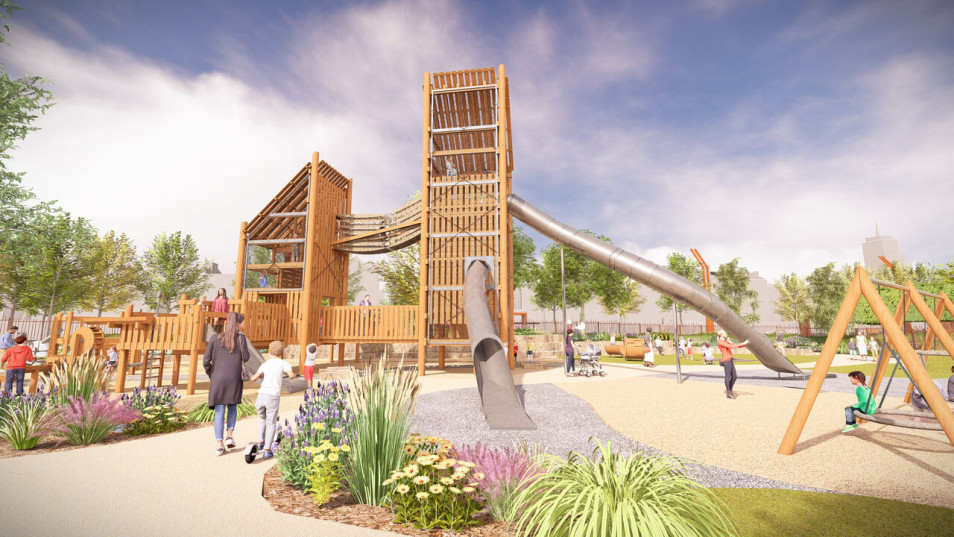
Alongside the new landscaping and improved access, the park will include a large, inclusive play area designed and installed by Timberplay. This space, open and free to use, adds vital play value to the town, giving children and young people a place of their own in the heart of the community.
The benefits of outdoor play are widely recognised. It supports physical development, reduces screen time, and helps children build confidence, independence and social skills. Importantly, it also boosts mental wellbeing. According to the National Library of Medicine, time spent outdoors in natural play environments has a measurable positive impact on children's emotional regulation and resilience. (Walkable communities: Impacts on residents’ physical and social health)
In a time when mental health among young people is in serious decline, public play spaces like this are more important than ever. They provide a “third place” – somewhere that’s not home or school – where children can explore, express themselves and connect with others.
For families living in towns like Stockton, where indoor space may be limited and access to private gardens isn’t guaranteed, public parks and play areas fill a crucial gap. They level the playing field.
A space that works for everyone
Timberplay’s approach to play is rooted in child-centred design. Working closely with the wider design team, we’ve helped create a space that’s full of opportunity for climbing, splashing, experimenting and collaborating. The equipment is made from durable, natural materials like Robinia and mountain larch, designed to stand up to intensive use while blending into the landscape. Every element invites children to play how they choose – not just how adults think they should.
While our contribution is just one part of a much larger scheme, the play area supports the project’s broader goals: to improve quality of life, encourage outdoor activity, and create a healthier, more connected Stockton.
Investing in a better future
This redevelopment isn’t just about making Stockton look better. It’s about helping people feel better physically, mentally and socially. It’s about creating a town that’s easier to move through, more enjoyable to spend time in, and more supportive of families and young people.
As cities and towns across the UK embrace the principles of walkable, child-friendly design – from the “15-minute city” approach to active travel schemes – Stockton’s investment puts it firmly on the map as a forward-thinking, people-first place (15-minute cities: Where they can be found in the UK - CityMonitor).
We’re proud to be part of it, Associate Director, Mark Grimshaw has been working with the Council since the project’s inception.
“Over the past decade, the role of town and city centres has shifted dramatically. With retail no longer the sole draw, councils must create vibrant, family-friendly spaces that bring communities together and encourage people to stay longer. Destination play areas are a fantastic way to do this.
Stockton has been incredibly ambitious with these plans. With Ryder Architects and Esh Construction, we’ve been able to create a space full of play opportunities for children of all ages and abilities. The installation of the towers is the first big change residents and visitors will see, and we hope they share our excitement as the park takes shape.”
This ambitious project is due for completion in spring 2026. We eagerly await seeing it serve its purpose in faciliating play for people of all ages - enhancing health, wellbeing, and moments of community connection.